

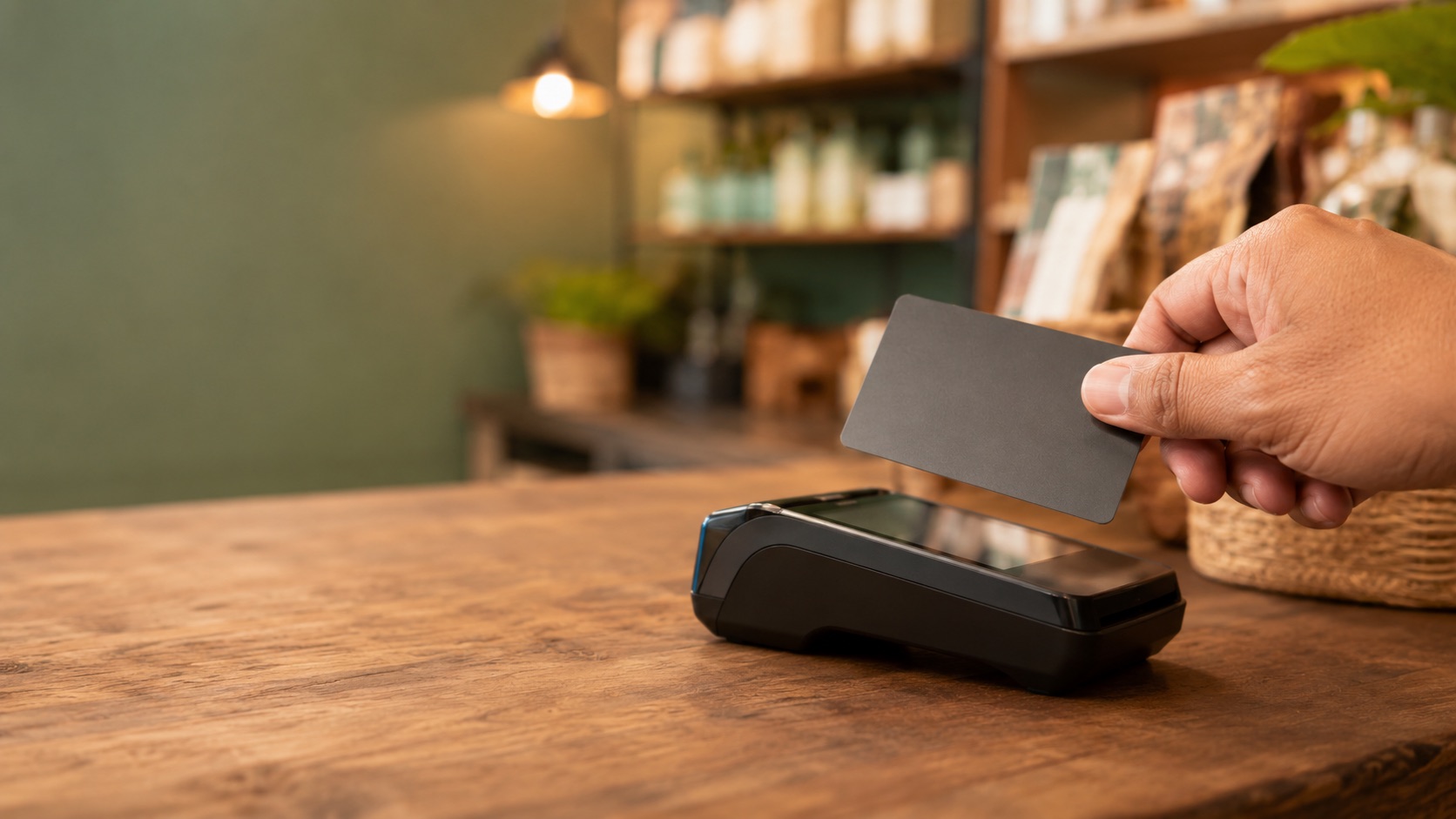
It is eleven at night and someone, on the other side of the country, has just dropped your product into their cart. They type the sixteen digits of their card, the expiry date, that three digit code on the back, and they hit "Pay". Two seconds later they see a green check and a "Thanks for your purchase!". In those two seconds six or seven things happened, data traveled halfway around the world, a bank said yes, and you, the seller, never saw that card number. What happened in between, invisible and lightning fast, is a payment gateway.
So let us go straight to the answer: asking what is a payment gateway is really asking who talks to the bank for you. A payment gateway is the service that receives your customer's card details, turns them into something safe to move around, asks the bank whether it approves the charge, and hands you back a plain "approved" or "declined". Neither you nor your page ever touches the real number. That is the whole deal, and everything else is detail about how it does it well.
01 · the messengerWhat it really does, step by step
Think of the gateway as a trusted messenger who speaks two languages: the language of your store and the language of the banking system, which is a world full of rules and locks. You do not want to learn that language. You hire someone who already knows it. When your customer hits "Pay", the messenger runs a fairly orderly errand.
First it tokenizes the card. This is the key move: instead of keeping the real number, the gateway replaces it with a code that is worthless outside that context, a "token". If someone stole that token, they could not buy anything with it. It is like handing your car to the valet: you walk away with a ticket, not the master key. Then, with that token, the gateway talks to the customer's bank through the card networks. It asks: this person, this amount, are there funds, is it legitimate, do you authorize it? The bank answers in milliseconds. And finally the gateway hands you the verdict: approved or declined, with a reason if it failed.
You do not charge the card. You ask someone who knows how to charge it for you, and you only listen for the yes or the no.
| Step | What happens | Who does it |
|---|---|---|
| 1 | The customer types their card at checkout | Your page (the gateway's form) |
| 2 | The number becomes a safe token | The gateway |
| 3 | The bank is asked to authorize the charge | The gateway and the card networks |
| 4 | The bank answers: funds, risk, yes or no | The customer's bank |
| 5 | Your store receives "approved" or "declined" | Your system |
02 · the hot potatoWhy you should never store the number
Here is the part many people find hard to believe, and it is the most important thing in the whole article: your customer's card number should never touch your server. This is not a friendly suggestion. It is the reason payment gateways exist.
Storing a card number is holding a hot potato. As long as it is in your hands, you are responsible for making sure nobody steals it, and the people who steal card data are well equipped professionals. There is a global standard, PCI DSS, created by the card brands themselves, that defines the rules for handling that data [1]. Meeting it seriously is expensive, technical and a permanent burden. The smart move for almost any business is not to comply better: it is to have almost nothing to comply with, and you achieve that by never touching the data. The gateway receives the card inside its own certified environment and hands you the token. You keep the valet ticket, not the key.
If your system can read a customer's full card number, something is badly designed. A modern business charges without ever seeing that number. What you keep, if anything, is the token and the last four digits so you can show "ends in 4242".
03 · the rehearsalWhat a sandbox or test mode is
Nobody launches a real charge with real money blind. That is why every serious gateway gives you a sandbox, or test mode: an exact replica of the system, but fake. Fictional cards that the gateway publishes in its documentation, amounts that move not a cent, and responses you can force at will. Want to see what happens when a card is declined for insufficient funds? There is a test card for exactly that.
The sandbox is the dress rehearsal in an empty theater. You test the whole flow, watch the "approved" and "declined" arrive in your system, fix what breaks, and only when everything works do you swap a couple of configuration keys and move to production, where the money is real. Skipping the sandbox is opening night with an audience and no rehearsal. You do not do it.
| Sandbox (test) | Production (real) | |
|---|---|---|
| The money | Fictional, nothing moves | Real, leaves the customer's account |
| The cards | Test numbers from the docs | Your customers' real cards |
| What it is for | Testing the flow with no risk | Actually selling |
| If something fails | Nothing happens, you fix it and retry | A real customer cannot buy |
04 · the tillWho takes a commission, and how much
This service is not free, and it is fair that it is not: someone carries the risk, the security and the conversation with the banks. The gateway charges a commission on every transaction, almost always a percentage of the amount plus a small fixed fee. The numbers change by country, by card type and by volume, but the shape is always similar: a percentage in the range of a few points, plus a few cents per operation.
The three gateways you will hear about most give a sense of the range, without any of them being "the best" in the abstract. Mercado Pago dominates much of Latin America and its strength is the local: installments, cash, the wallet your customers already use [2]. Stripe is the favorite of anyone who builds software, thanks to its flawless documentation and API [3]. PayPal has global reach and a brand millions already recognize and trust [4]. The right one is the one your customers already use and the one that fits your country and your operation, not the one that sounds best.
The commission is not an annoying tax. It is the price of not having to talk to the world's banks yourself.
05 · the checkoutHow Qirava uses it
Here it helps to be honest about what we do, because it explains what Qirava is about in general. Today, in the Qirava demo, the checkout runs in sandbox: you can walk a purchase from start to finish, see the form, the token, the "approved", without a single cent moving. It is the open rehearsal so you can see the real flow without risk. In production, that same piece connects to the real API of whichever gateway suits your business and your country, and it starts moving real money.
But the charge is only one thread of the braid. Qirava does not sell "a gateway": around the payment we weave the identity check of whoever is buying, the orderly record of every operation, AI agents that review, summarize and alert, and the people who decide when something is not routine. We do not hand over a loose feature; we integrate many layers, some software and some human, so the charge is a calm part of a complete service. That integration, and not an isolated pay button, is what truly creates value. The payment has to be boring, safe and reliable, so that you can get on with what actually is your business.
So the next time you hit "Pay" and see that green check in two seconds, you know what happened underneath: a messenger tokenized the card, talked to a bank, came back with a yes, and protected the seller from having to store something they were never meant to touch. That is a payment gateway. Everything else is it working so well you never notice.
Sources
- PCI Security Standards Council, Payment Card Industry Data Security Standard (PCI DSS), Requirements and Testing Procedures. Standard created by the card brands that defines how payment card data must be protected; among its principles, minimizing storage of cardholder data and protecting whatever is handled.
- Mercado Pago, Developer Documentation (Checkout and Payments API), Mercado Libre. Official documentation describing the payment integration, the test (sandbox) mode and the per transaction commission scheme.
- Stripe, Stripe Documentation (Payments, Tokenization and Testing), Stripe, Inc. Official documentation explaining card tokenization, the test environment with fictional cards and the per transaction fee model.
- PayPal, PayPal Developer Documentation (Checkout and Payments), PayPal Holdings, Inc. Official documentation for payment integration, the sandbox environment and the commission structure.